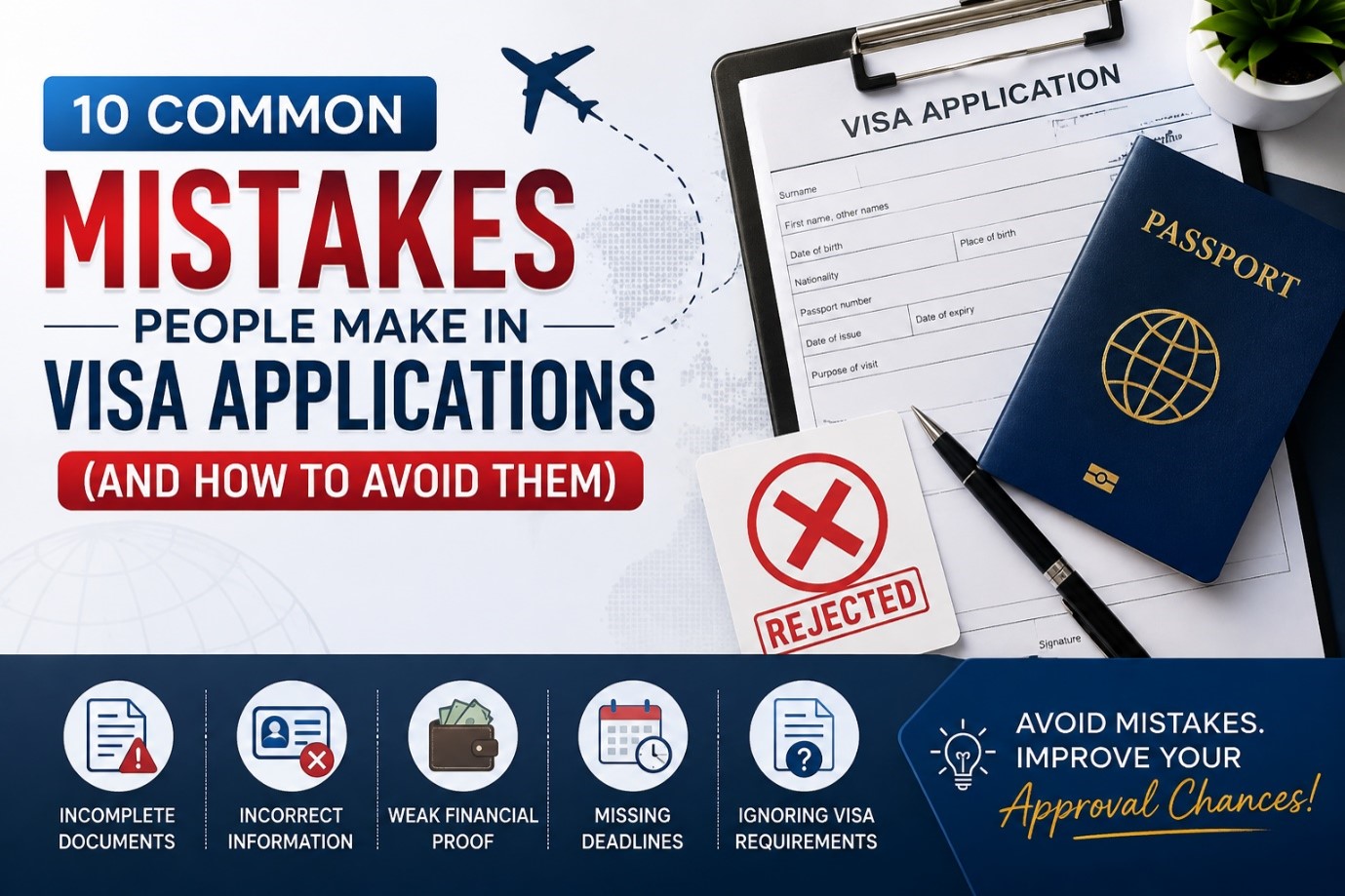
10 Common Mistakes People Make
in Visa Applications
(And How to Avoid Them)
💡 Quick Overview
Discover the 10 most common visa application mistakes that lead to delays and rejections — and learn practical steps to avoid them before submitting your application.
Most visa applications aren't rejected because the person didn't qualify. More often, it's something small — a document that got left out, a date of birth that doesn't quite match between two forms, an SOP that reads like it was put together in a hurry.
We've seen this happen to applicants who, on paper, had a strong case.
The useful part is that these issues tend to repeat. Once you've looked at enough applications, the same few problems keep showing up. So here are the ten we come across most, along with what usually fixes them.
Why Do Visa Applications Get Rejected?
An officer typically spends just a few minutes on each file. They're not hunting for one big issue — they're checking whether things line up.
A date that's slightly off, an answer that feels vague, or a document that doesn't quite match the rest. None of it is serious by itself, but together it adds up to doubt.
And doubt, more often than any single mistake, is what tips a case toward rejection.
10 Common Mistakes People Make in Visa Applications
Missing or Incomplete Documents
Still the most common one. A bank statement that didn't make it in, a photo that's the wrong size, or a passport copy with a corner cut off. Small things, but often enough to get a file delayed or sent back.
Details That Don't Match Across Documents
Your passport shows one date of birth while another appears on your application, or your name is spelled differently across documents. Even small inconsistencies can raise questions during the review process.
Financial Proof That Doesn't Hold Up
Either the available balance is insufficient, or the statement appears unclear due to poor-quality scans. Both situations may cause the application to be flagged for further review.
A Generic or Copy-Pasted SOP
An SOP should clearly explain your genuine purpose. A statement that only lists facts without showing your motivation can weaken an otherwise strong application.
Providing False or Exaggerated Information
Inflating a job title, overstating a salary, or providing inaccurate information can affect not only the current application but also future visa applications.
Applying Under the Wrong Visa Category
More common than people expect — applying for a tourist visa when the real plan is to work, or the reverse. Usually not intentional, but it's an easy way to get turned down.
Submitting Too Much Extra Paperwork
Adding more than what's asked for can work against you. A file that looks padded sometimes reads as an attempt to cover up a weak point.
Not Showing Enough Ties to Your Home Country
This matters more for tourist and study visas than people realize. A steady job, property, or family responsibilities all help show that you intend to return.
Missing Sponsor Documentation
If someone else is funding your trip, a bank statement on its own usually isn't enough. Proof of how they're related to you, and where their income comes from, is often the part that's missing.
Not Disclosing a Past Visa Refusal
If you were refused before, even for a different country, it's usually better to mention it yourself. A refusal that surfaces later tends to look worse than the refusal itself.
Quick Checklist: How to Avoid These Mistakes
Documents
Go through a checklist before submitting. Keep both originals and copies ready.
Consistency
Check names, dates and addresses across every document. Update anything that's changed, like your name after marriage.
Finances
Build the required balance a few months ahead, not right before applying. Make sure the statement is clear and easy to read.
SOP
Write it yourself, in your own words. Cover why this country, why now, and why you'll return.
Honesty
Submit what's accurate. If part of your history looks unusual, explain it instead of leaving it out.
Visa Type
Confirm the category actually matches what you plan to do.
How Much to Submit
Give them what's asked for, not more. Extra paperwork doesn't make a case stronger.
Ties to Home
Include proof such as job letters, property documents and family responsibilities.
Sponsor Details
Include your sponsor's relationship to you and where their income comes from.
Past Refusals
Mention previous refusals honestly and briefly explain what's different this time.
What happens if my visa gets rejected? ▼
In most cases, you can reapply once you've addressed the reason for the rejection. Some visa categories also allow an appeal within a set period.
Can I reapply right away? ▼
Yes, but sending in the same application again usually doesn't help. It's better to identify what actually went wrong first.
Does a rejection affect future applications? ▼
It can, especially if it isn't disclosed. An undisclosed refusal is often viewed more critically than the refusal itself.
How long should I wait before reapplying? ▼
It depends on the country and visa type. Some allow you to reapply right away, while others require a waiting period.
Should I apply on my own, or use a consultant? ▼
Many applicants manage it successfully on their own. For complex cases or first-time applicants, having a consultant review your documents and SOP can help identify issues before submission.