Work Visa vs Job Offer
What Comes First When Planning to Work Abroad?
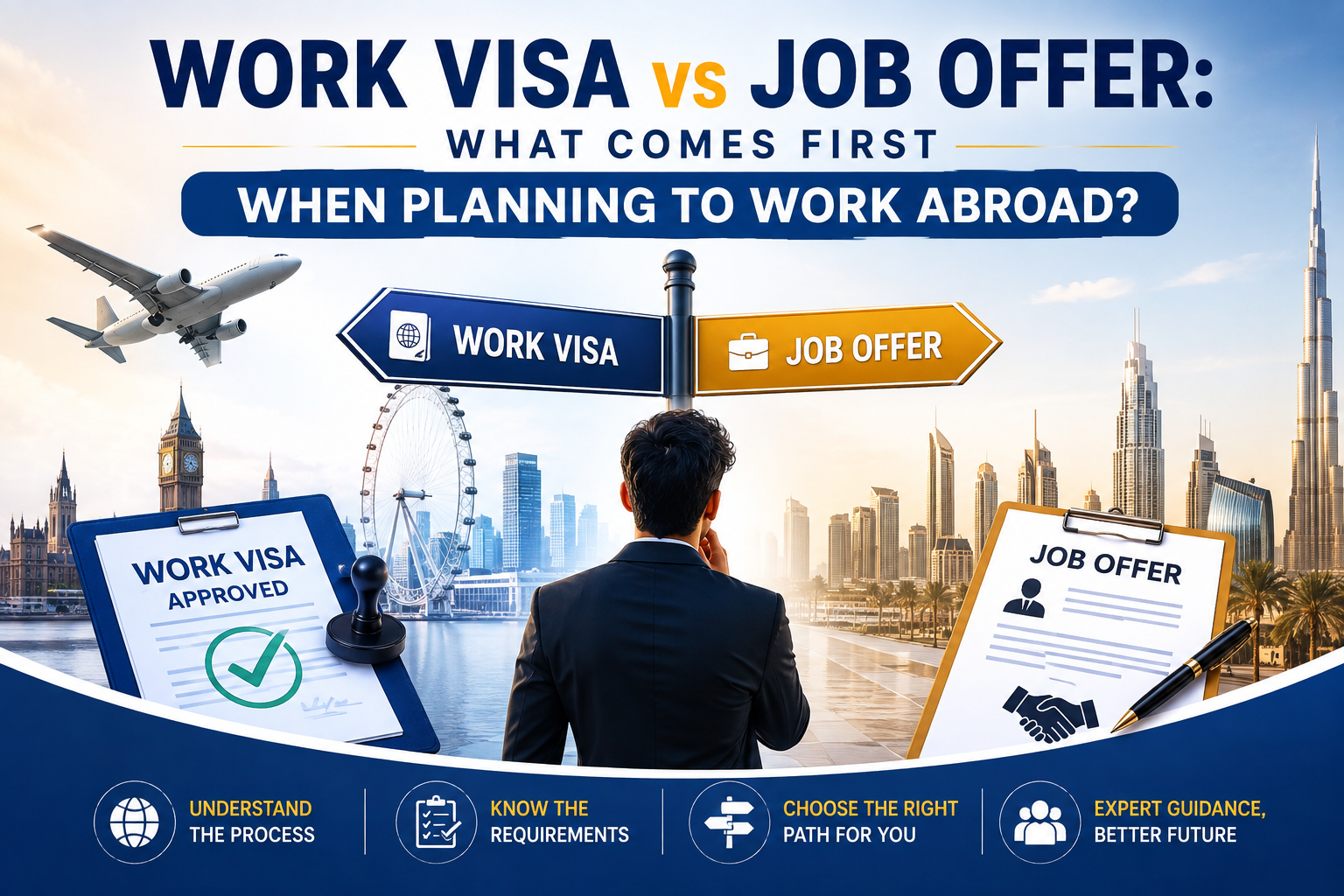
If you've started looking into working overseas, you've probably run into this chicken-and-egg question pretty quickly: do you need a job offer before you can get a work visa, or do you need a visa before anyone will even consider hiring you?
It's confusing, and honestly, a lot of people waste months (sometimes years) going down the wrong path simply because nobody explained this clearly to them. So let's break it down properly.
The Short Answer: It Depends on the Country
There's no single rule that applies everywhere. Different countries structure their immigration systems differently, and where you're headed changes the entire order of operations.
In most cases, the job offer comes first. Countries like the UK, USA, Singapore, and much of the Middle East require an employer to sponsor your work visa. No employer, no sponsorship, no visa. Simple as that.
But some countries flip the order. Places like Canada and Australia run points-based immigration systems. You can apply for a work permit or skilled visa based on your qualifications, experience, and age — and only look for a job once you're already eligible to work there, or even after you land.
So the real first step isn't "get a visa" or "get a job." It's figuring out which system your destination country uses.
Employer-Sponsored Visas: Job Offer First
This is the route most people end up on, especially if you're eyeing the UK, USA, UAE, Saudi Arabia, or Singapore. Here's what it actually looks like in practice:
You land a job offer from a company based in that country.
That employer takes it from there — they're the ones who file for your work permit or sponsor your visa. You're not doing this part alone.
Once it's approved, the visa lands in your hands and you're free to travel.
Sounds straightforward, right? Here's the part nobody tells you upfront: getting that job offer is the hard bit. Employers abroad aren't exactly rushing to sponsor someone without relevant experience or a skill they actually need — sponsoring a foreign hire costs them time and money, so they want to be sure it's worth it.
This is exactly why so many people get stuck sending out resume after resume with zero replies. It's not that they're unqualified — it's that they're applying to the wrong companies, or companies that don't sponsor visas at all. A good recruitment or immigration consultancy skips that entire guessing game. They already know which employers abroad are actively hiring international talent, so instead of you shouting into the void, you're introduced directly to people who are looking to hire.
Points-Based & Skilled Migration Visas: Visa First
Canada's Express Entry, Australia's Skilled Independent Visa, and similar programs work differently. These don't require a job offer at all (though having one can boost your score).
Instead, you're assessed on factors like:
- Age
- Education
- Work experience
- Language proficiency (English or French, depending on the country)
- Adaptability factors
If you score well enough, you get invited to apply for permanent residency or a work visa — and the job search can happen after you arrive, or in parallel.
This path takes longer to prepare for since there's paperwork, language tests, and skill assessments involved, but it gives you far more flexibility once you're in the country.
So What Should You Actually Do First?
Instead of asking "visa or job first," ask yourself these three questions:
Which country am I targeting?
This alone tells you which system you're dealing with.
Do I have in-demand skills or experience?
If yes, the job-offer route can move quickly. If you're just starting out, a skilled migration pathway (where eligible) might suit you better.
Am I working with the right guidance?
This is where most people go wrong. They either apply for visas without understanding eligibility, or they send hundreds of job applications to companies that don't sponsor foreign workers at all. Both routes waste time and money.
The Real Shortcut: Get Assessed Before You Apply Anywhere
Whether it's a job offer or a visa application, the smartest first move is getting a proper eligibility assessment done. This tells you:
- Which countries you actually qualify for
- Whether you need a job offer or can apply independently
- What documents, tests, or certifications you're missing
- A realistic timeline instead of guesswork
At Global Gateway Internationals, that's exactly where we start — with you, not a template. We take the time to actually understand your profile first, then map out the fastest, most reliable path that fits your situation, instead of pushing everyone through the same generic process.
Final Word
There's no universal first step for working abroad — it genuinely depends on the country and the visa category. What matters is knowing which system you're entering before you start spending time, money, and hope on applications.
If you're serious about working overseas and want clarity on whether you need a job offer or a visa first, reach out to us. We'll walk you through your specific case instead of giving you a one-size-fits-all answer.
Not Sure Which Path Fits You?
Get a free eligibility assessment and find out whether you need a job offer or a visa first for your target country.